Flagship product
BLKPVNTHR.OS
An AI-native operating system: a knowledge-graph interface over a research pipeline, a read-only accounting agent, a paper-trading engine, an email agent and a workflow runtime.
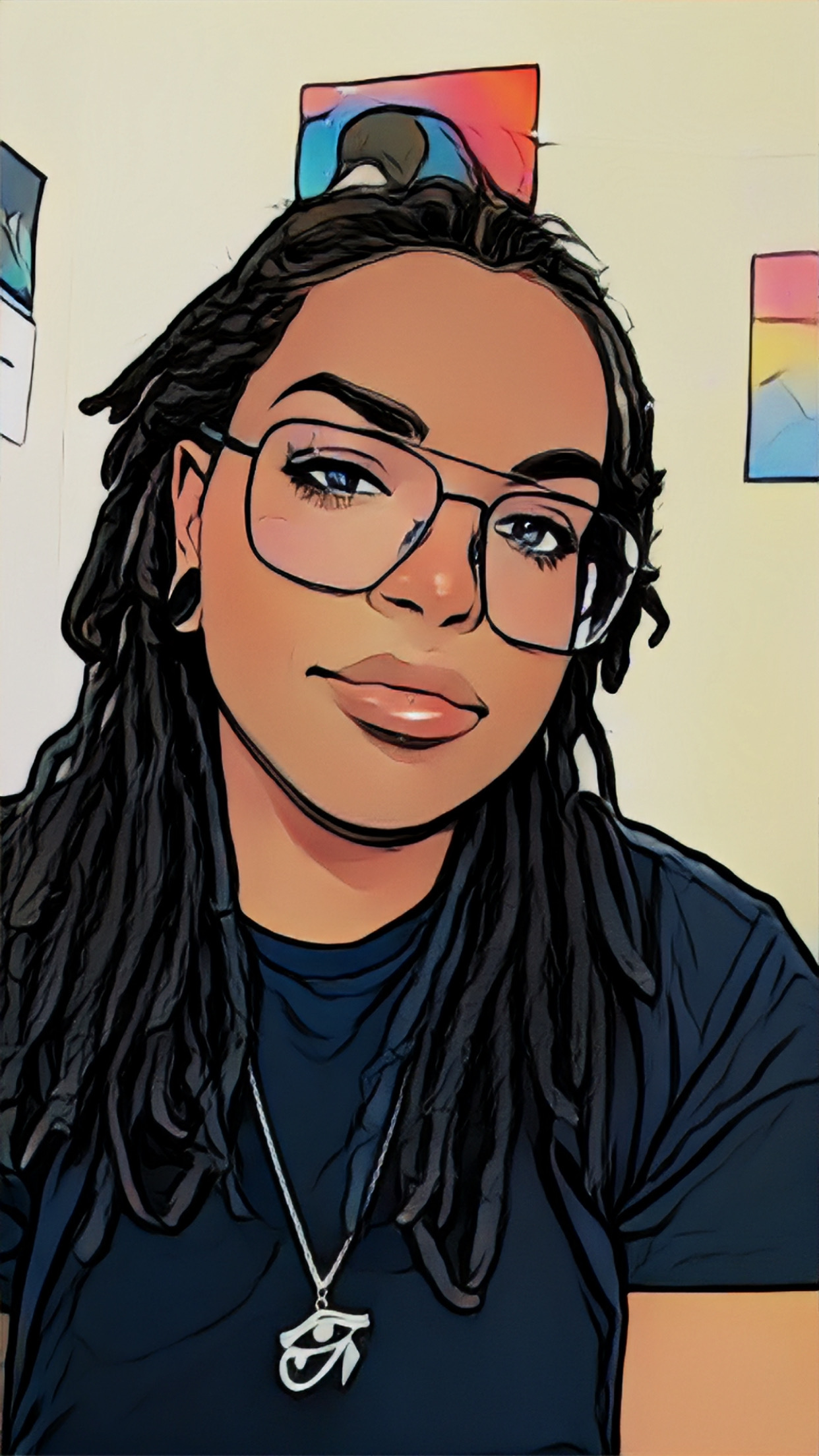
I'm Asmaa Abdul-Amin, a software engineer and creator of BLKPVNTHR.OS — an AI-native operating system that combines financial intelligence, quantitative research, knowledge management, and workflow automation.
Opens in guest mode — no sign-up.
root@blkpvnthr-os:~$ — and typing
start opens the AI Brain.
featured product
An AI-assisted wealth-building platform: an autonomous quantitative research pipeline with investment account integration, a Personal Accounting Agent with live bank account integrations, a career goal tracker, an emailing assistant, and a day-to-day personal assistant — designed to help everyday people learn how to build their wealth, keep track of their finances, and work toward their financial goals.
“The graph is the application — every node is clickable, opens the Inspector.”
Six of the engines behind the graph. Scroll, swipe, or use the arrows.
The landing surface of the OS: a live knowledge graph of engines, missions, agents and data sources. Click any node to open the Inspector and drill into what it does.
/os18 laboratories running a research lifecycle from observation and phenomenon detection through hypothesis and counter-hypothesis, statistical and economic validation, historical robustness, paper-trading validation and replication. Paper / research only.
/research-divisionBank accounts linked read-only through Plaid, with balances surfaced alongside goals. You sign in with your bank inside Plaid's secure widget; the app never sees your bank credentials.
/engines/financeAn Alpaca-backed trading surface with a discipline layer for rules and review. Paper-first — live orders are disabled in the deployed product.
/engines/tradingEmail sync and classification behind Supabase Edge Functions, plus workflows and missions that chain agent steps into repeatable operations.
/email, /workflowsA vault for documents and notes, a Graphify pipeline that turns arbitrary input into a knowledge graph, and a memory layer the agents read from.
/vault, /graphifyTrading is paper-first — live orders stay disabled until a strategy clears the platform’s paper-trading threshold. Bank connections are read-only through Plaid; the app never sees your bank credentials. Nothing here is investment advice.
selected work
Systems I designed and built, from an AI-native operating system to public-facing science-mission web work.
Four systems. Scroll, swipe, or use the arrows.
Flagship product
An AI-native operating system: a knowledge-graph interface over a research pipeline, a read-only accounting agent, a paper-trading engine, an email agent and a workflow runtime.
Space and mission
Public-facing science-mission web and visualization work — mission portals, interactive explainers and outreach visuals. Detail here is limited to publicly released material.
Research platform
A FastAPI research engine with pattern discovery, alpha discovery, evidence fusion and a strategy lab, wired to a paper-first execution surface. Figures shown are demo state, not a track record.
Data and AI
Data ingestion and transformation: a Python project that scrapes retail prices through the SerpAPI search API, with a web-scraping fallback, then uses pandas to compute year-over-year change and plot it. The same pattern — pull messy third-party data, normalize it, make it legible — runs throughout my work.
services
I help organizations design and implement systems for financial reporting, operational intelligence, research automation, knowledge management, data integration, and AI-assisted workflows.
Agent, retrieval and workflow design — where the model belongs, where it does not, and how state moves between them.
Balances, budgets, goals and reporting surfaces built on read-only integrations with clear provenance for every number.
Ingestion and transformation pipelines, third-party APIs behind server-side functions, secrets kept off the client.
Document vaults, knowledge graphs and memory layers your team and your agents can both query.
Hypothesis-to-validation pipelines with holdouts, robustness checks and a written record of what was rejected and why.
A hard look at an existing system: failure modes, data handling, test coverage, deploy path and what breaks first under load.
React and TypeScript on the front, Python or Node services behind it, deployed and maintained.
The recurring manual work — reports, reconciliations, handoffs — turned into scheduled, observable jobs.
We map the work as it actually happens today, name the bottleneck, and agree on what success would look like.
A narrow, working slice of the system — enough to prove the approach and enough to kill it early if it does not hold up.
The full build: tested, documented, deployed, with the integrations and access controls it needs.
Monitoring, iteration and the next round of scope, once the system has met reality.
experience
Engineering roles across space-mission web infrastructure, undergraduate research, and independent work.
The Johns Hopkins University Applied Physics Laboratory — SES/SOF-2
Fortified and optimized Space Sector web infrastructure across 15+ NASA mission platforms. Engineered data ingestion and transformation pipelines for high-frequency environments.
The Johns Hopkins University Applied Physics Laboratory — REDD/R1N
Engineered and deployed web pages for a NASA Dragonfly mission portal. Built an ML model relating COVID-19 policy measures to mortality data.
Developed the core skills behind my software development and data engineering work, and continue to extend them through self-directed study in machine learning, quantum computing and DevOps.
University of Maryland Global Campus
Comprehensive coursework in data science and engineering, applied to building dynamic and interactive web applications.
2022–presentFoundational computer science, which is where the software development habits started.
2026about
Long before I wrote code I was building things in whatever medium was in reach. I learned piano, guitar and bass entirely by ear — listening, experimenting, recreating what I heard without sheet music — and when I wasn't playing I was painting and drawing, preoccupied with composition, balance, and the work of turning an idea into something you can actually hold. That is where I learned to see patterns and to look for structure inside complexity.
Software turned out to be the same instinct with different instruments. Late-night programming experiments became a real interest in designing systems, and today my work spans backend development, distributed systems, machine learning and data-driven software. That path included an internship at the Johns Hopkins Applied Physics Laboratory supporting space-mission web work. The canvas changed; the mindset didn't. I'm a data-driven engineer, cat person, artist, musician, quantum-curious tinkerer, and quietly ambitious programmer — and creativity is still the engine behind everything I build.
contact
Tell me about the system you want to build, or the one that is already giving you trouble.
Thanks — your message is on its way. I'll get back to you soon.
Something went wrong sending that. Email me directly at blkpvnthr@asmaa.dev.